The other day, while I was DJing at a milonga, a dancer came over and asked: “Haven’t you got anything… younger than me?” This wasn’t an isolated incident. It happens every now and then. They might mean a contemporary orchestra, a recent recording, or even what is usually called “non-tango”. Sometimes they explain: “Because, honestly, I’ve had enough of this old tango music.” On other occasions, the question is more practical: “Is there something wrong with the speaker? There’s a lot of noise.”
I could say, “You’re at the wrong party.” But once I get past that first reaction, I want to understand what these requests mean. There seems to be an implicit judgement that old music is outdated, exhausted, or no longer relevant. New music escapes that judgement for a while, simply because it belongs to the present. But whatever we call new today will also become old.
Then there are conversations outside the milonga. Someone tells me, as though pointing out something I have somehow overlooked: “You do realise that the music we listen to at milongas is music by dead people?” Whenever I hear this, I think about museums. We stand in front of a painting, sometimes several centuries old, and look at it. We may like it, dislike it, or find something in it that stays with us. But how often do we turn to the person beside us and say: “You do realise we’re looking at a painting by a dead person?”
What do we mean by “old”?
“Old” can describe the composition, the style of playing, the sound of the recording, or simply the feeling that the music belongs to somebody else’s time. These are different things, although we often bring them together in a single word. A recording made in 1938 has a date. Calling it too old to be interesting expresses a judgement about what it can offer us today.
Of course, nobody has to enjoy every orchestra or every recording. A preference for a contemporary sound deserves to be taken seriously. Still, when age becomes the explanation for dismissing the music, we may turn away before hearing what this particular performance has to propose.
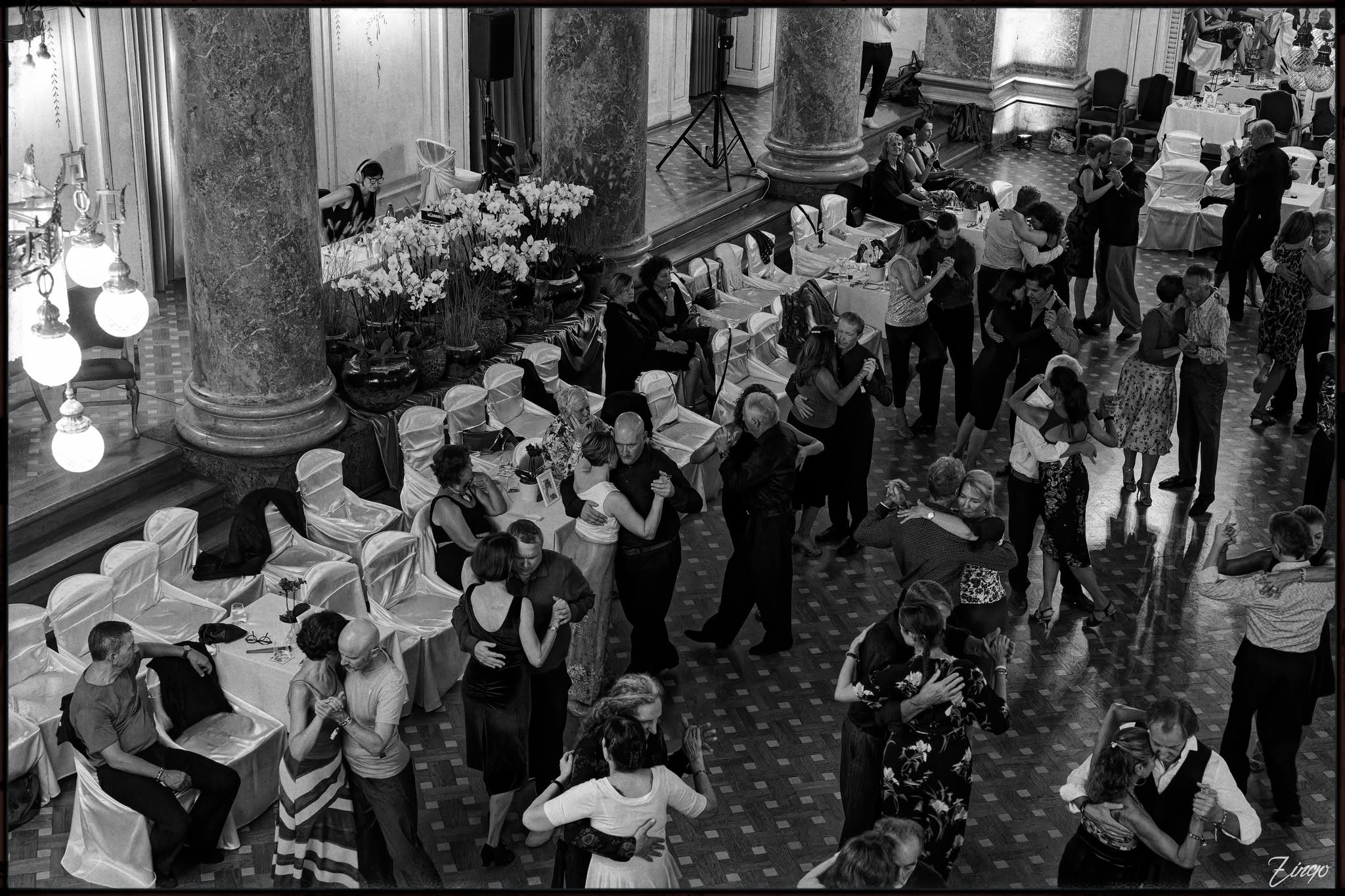
Dancing for years. Listening for how long?
At first, I often assumed these requests came from people who had recently started dancing. They were approaching tango through their existing listening habits and perhaps expected a recording to sound like the music they usually listened to. Sometimes I also wondered how much the music itself mattered to their dancing. Would a different piece change their movements, their phrasing or the way they moved through the room? Or would much the same dance unfold regardless of what was playing? That was my initial suspicion, rather than something the request alone could tell me. But conversations with more experienced dancers complicated this explanation. Some people who have been dancing for many years told me that they never listen to tango outside the milonga. Not at home, not in the car, not through headphones. Some said quite plainly that, without the dancing, the music did not interest them.
So how many years someone has danced does not tell me what place tango music occupies in their life. Some listen to it at home, follow particular orchestras and singers, and return to recordings without any intention of dancing. Others encounter it almost entirely through the milonga. That does not mean they listen less attentively. They may hear a pause, anticipate an accent or respond to a change in phrasing with remarkable sensitivity. For them, listening and dancing belong to the same experience. The embrace, the movement and the presence of the other dancers are part of what makes the music meaningful.
What interests me is how these different relationships shape our expectations. At home, listening can be an experience in its own right, independent of dancing. At a milonga, the music arrives as part of an evening I share with others, and I encounter it through the possibilities it offers my dance. The same person may listen differently in these two situations. Neither experience tells the whole story. And simply knowing that someone never listens to tango at home does not explain why they welcome an old recording or reject it. To understand that reaction, I also need to consider the listening habits and expectations they bring from the rest of their musical life.
Music and the desire for something new
We listen to music while travelling, working, cooking or exercising, through headphones, a phone, a car stereo or a speaker at home. Some of us still buy records and sit down to listen to them. Others move between streaming services, recommendations, radio and playlists. These different situations give music different amounts of our attention. Streaming gives us access to an extraordinary range of music. But it also changes how we listen. We can spend an entire evening exploring an orchestra’s recordings, or move from one track to another after only a few seconds, like a butterfly moving from flower to flower. There is pleasure in sampling so much, and we may discover music we would otherwise never have heard. But when moving on becomes a habit, we may leave before the music has had time to reveal itself. We can hear more and more without necessarily listening more deeply.
Among recommendations, new releases and whatever is currently attracting attention, novelty becomes one reason to listen. There is a pleasure in discovering something as it arrives, sharing it with other people, and feeling that we are taking part in our own time. Music becomes part of how we recognise ourselves and each other. A song can belong to a summer, a relationship, a period of our lives. We carry those associations with us. Perhaps an old tango can initially feel distant because we do not yet have any personal history with it. It seems to belong to other people’s memories. We have not had the opportunity—or the desire—to make it part of our own.
Tango itself developed through change. From its early forms to the guardia vieja, the guardia nueva and the orchestras of the Golden Age, musicians continually renewed its composition, arrangements and interpretation. What we now call “traditional tango” contains many things that were once new. That exploration continued as tango lost part of its popular audience. Piazzolla, Pugliese, Salgán, Stamponi and others expanded tango’s musical language, sometimes taking it towards more elaborate and avant-garde forms. Their work carried tango beyond its Golden Age world and gave it a more universal reach. People could find something in this music without belonging to its culture of dance or sharing its memories of Buenos Aires. Tango’s declining popularity as a social dance did not mean that its creative possibilities had been exhausted.
The desire for novelty belongs to tango’s own history. What deserves questioning is the assumption that each new development makes earlier music less worth hearing.
What the museum prepares us to see
A museum prepares us for a different encounter with time. We arrive expecting to see works from other periods. Dates, rooms, labels and exhibition texts give them a curated context. Their age becomes part of what we have come to explore. We may need time to understand what we are looking at, and the setting encourages us to allow for that. It also gives the work a kind of institutional approval. Someone has selected it, preserved it and decided that it deserves to be shown. We may receive this as a guarantee of quality, or even as an instruction about what we ought to admire.
The hype surrounding a major exhibition can reinforce the feeling that this is something we ought to see. Everybody seems to be talking about it; apparently, we must go. Yet we can leave a celebrated exhibition feeling very little, then discover a small exhibition somewhere else that stays with us for years. Recognition and personal significance do not necessarily coincide. A museum can guide our attention and help us understand an unfamiliar work. It cannot settle what that work will mean to us. The encounter remains personal, even when everything around it encourages a particular response.
We have a similar freedom with music. We can follow new releases, return to familiar recordings or discover something made long before we were born. Jazz and classical music already offer familiar settings for this movement between periods. An old performance can remain a reference, or become a new discovery for somebody hearing it today.
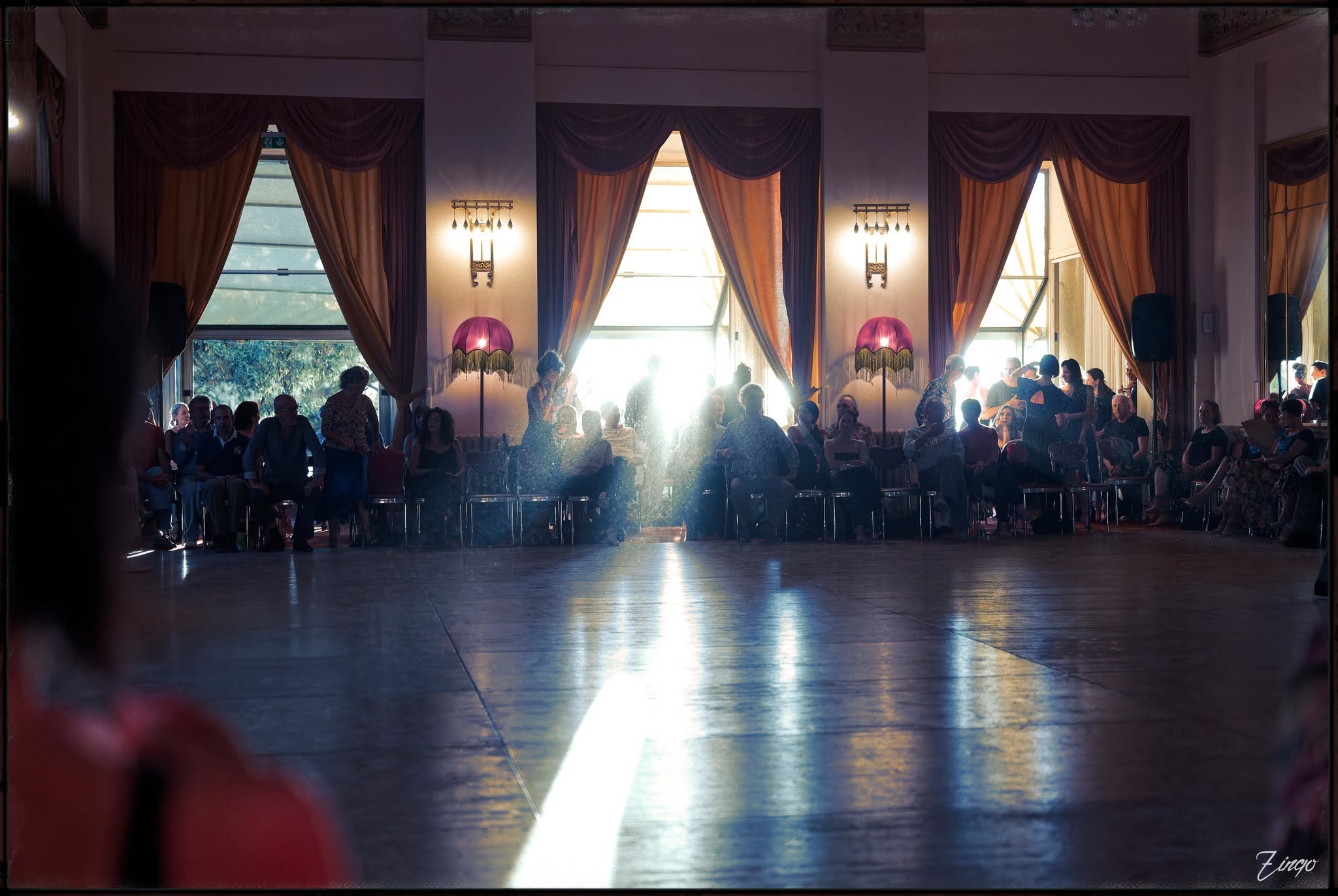
At a milonga, however, an old recording may have to overcome our resistance before we even begin to listen. Yet it has something immediate to offer. Let us remember the milonga triangle: the couple, the music and the ronda. A phrase passes through the room, two people respond to it, and their dance finds its place among the other couples. The music is already part of what we are living. Calling it old tells us when it was recorded, but leaves out what it is doing here.
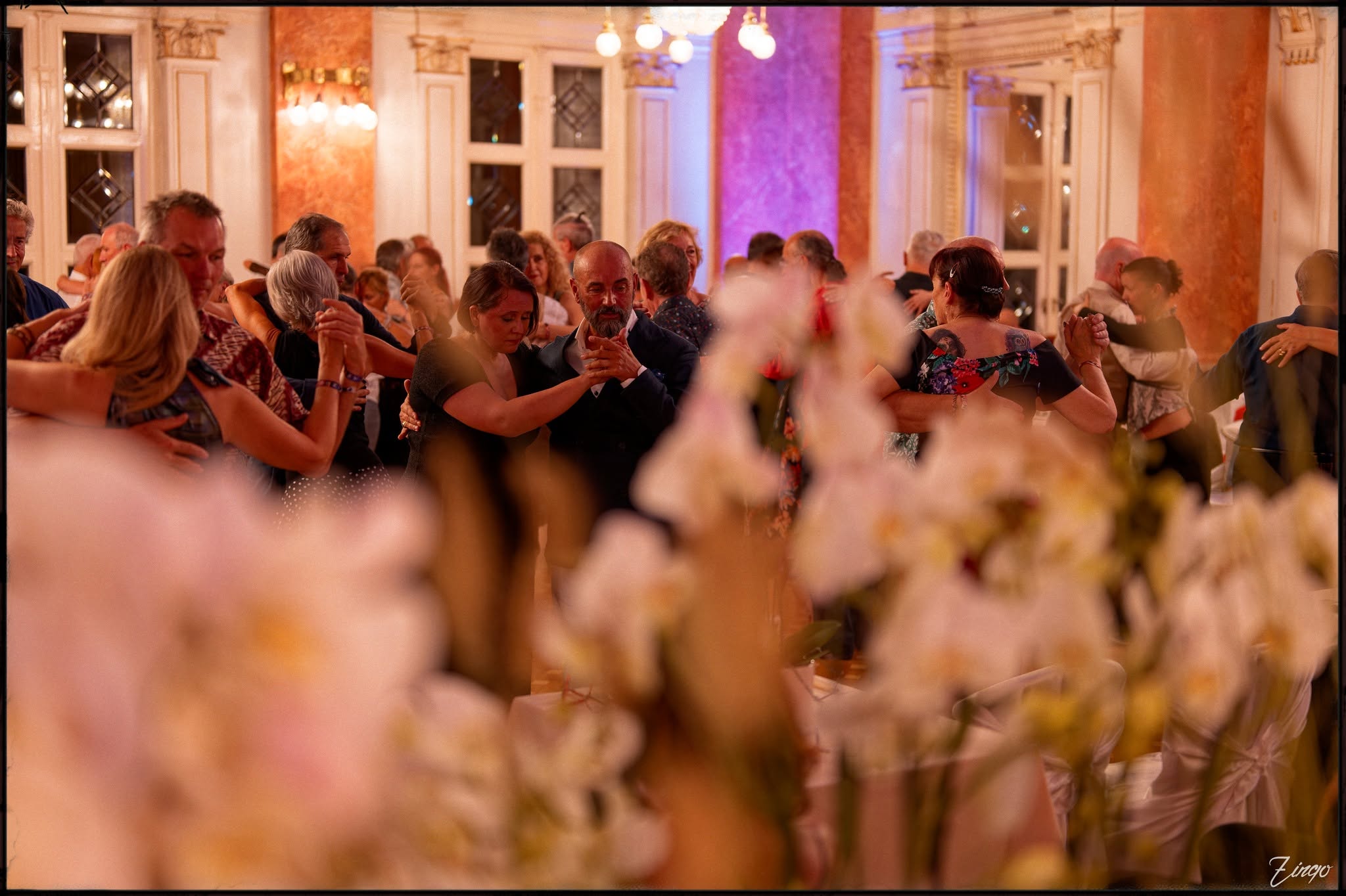
A museum’s approval cannot decide what moves us, and novelty offers no firmer guarantee. But is newer always better? We still have to listen and discover what happens between the music and ourselves.
The noise we hear before the music
With old tango recordings, historical distance is often audible from the first second. Before we have followed the melody or noticed how the orchestra phrases a passage, we hear surface noise, crackle, hiss or distortion. Sometimes the age of the recording announces itself before the music has had a chance to introduce itself. Someone who asks whether the speaker is faulty may be asking an entirely sincere question. In their usual listening experience, this kind of noise suggests that something is wrong. They may not recognise it as a characteristic of the recording they are hearing.
As a DJ, I still have a responsibility to find good sources and pay attention to playback. Familiarity with old recordings should not become an excuse for avoidable harshness or poor sound. At the same time, a carefully transferred historical recording will not necessarily resemble a modern production. That difference is something we also learn to hear.
With repeated listening, I find that the noise can take up less space in my attention. It is still there, but I follow the bandoneon, the violin, the way a phrase holds back or moves forward. As a dancer, I use these musical events to articulate my dance: a pause, a change of weight, a movement that follows the phrase or plays with its rhythm. I need to feel that I am hearing the real thing: the musicians’ phrasing, attacks and interplay coming through the recording. If the sound feels false or artificially reconstructed, I get distracted. I find it harder to trust what I hear, and that affects my dancing and the decisions I make.
What we call noise also depends on what we are trying to hear. In the early 1930s, while investigating interference in radio reception, Karl Jansky traced a persistent hiss to the Milky Way. What was unwanted interference for radio communication became something worth studying in its own right. NASA’s account of Jansky’s discovery illustrates this shift in perspective: what had been treated as noise became the signal of interest.
Milk in the coffee
When we restore an old recording, we are working with music and noise that already arrive together. We do not usually have an untouched version of the performance waiting somewhere else, ready to replace what has been damaged or obscured. I sometimes think of milk poured into coffee. Once the two are mixed, taking out the milk without taking out any coffee becomes a different problem from simply deciding how much milk we would have liked in the first place. The comparison has its limits. Some clicks can be repaired quite precisely, and some continuous noise can be reduced effectively. But where noise and musical detail overlap, processing can also alter the performance itself. Sometimes, listening to what has been removed reveals a trace of the voice, an instrumental attack or a resonance that belonged to the performance. The least noisy result is not necessarily the best one—or the most faithful to the performance.
I do not need to find the crackle beautiful to accept it. I would often prefer to hear less of it. But sometimes I think the best noise reducer is my own brain. This shift in attention leaves the recording untouched. And sometimes I like to imagine the noise of the record as a kind of cosmic noise—a distant background through which a human performance still reaches me. And then, all of a sudden, I find it beautiful.
Old music, a present-day experience
Our relationship with old recordings is also a subject within tango itself. In “Orquesta típica”, Enrique Cadícamo wrote: “La Típica va marcando / un viejo tango sentido.” An old tango, deeply felt. Juan D’Arienzo recorded it with Alberto Reynal in 1941. So a recording we now call old was already singing about an old tango. And then there is Ángel D’Agostino’s orchestra with the voice of Ángel Vargas—what I like to think of as an orchestra of memories, evoking the streets, the people and the everyday life of an older Buenos Aires. That retrospective feeling also appears elsewhere in D’Agostino’s recordings. In “Café Domínguez”, the spoken introduction, with words by Julián Centeya, recalls the vanished world of the old Calle Corrientes. The past was already part of the music’s present.
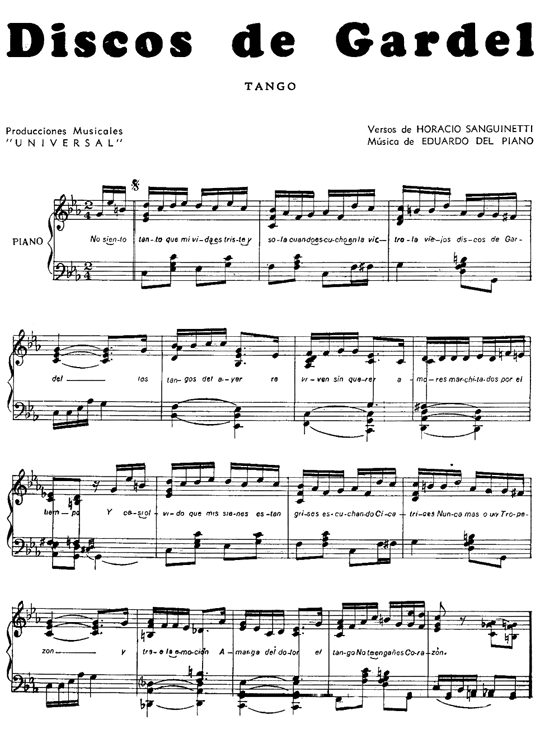
In “Discos de Gardel”, the singer listens to old records and finds his own life coming back to him: lost loves, familiar streets, people he will never see again. Tanturi and Campos recorded it in 1945. Even during what we now call tango’s Golden Age, somebody was already finding comfort in older recordings.
The record as a time machine
“Discos de Gardel”, by Horacio Sanguinetti and Eduardo Del Piano, can also be heard as an allegory of the record’s power to take us back in time. We are not talking about revisiting the hits of the 1980s or 1990s. These recordings take us much further back, beyond my own memories, into a world I never knew. And yet a voice, a phrase, a way of playing can reach us with an intimacy that makes the distance difficult to grasp. There is something dizzying about that: the technology allows us to hear a human performance long after the people who made it have disappeared. I sometimes wonder whether resistance to this music, where it exists, also contains a certain unease—a reluctance to accept that something so distant can still feel so close.
I never lived in Gardel’s Buenos Aires. I do not share the memories these songs evoke, but I can still be moved by them. A recording can carry somebody else’s past into my life without requiring me to pretend that it was ever mine.
Tangos tell us stories. Impossible love, missed opportunities, departures, regrets, a meeting that comes too late. Often there is no happy ending. Sometimes the person telling the story has understood something; sometimes they seem determined to repeat the same mistakes. These stories reflect the human condition: where we come from, where we are going, and our awareness that our time is limited. They bring us back to what we have lost, what we still hope for, and the possibilities we may never experience but which continue to nourish our dreams and desires. We may recognise something of ourselves in these stories. We may also encounter attitudes we dislike or a world we do not fully understand. Listening does not require us to agree with everything being sung. It gives us an opportunity to hear another person’s experience and see what it brings into our own.
This is why the remark about “music by dead people” seems to leave so much out. The musicians are gone. Their performance can still make something happen: a moment of recognition, a feeling we had forgotten, an unexpected possibility in the dance. Part of what makes tango distinctive is how closely poetry, music and dance are intertwined. We can listen to its stories, hear them take shape in the music, and respond to them through our dance.
The more music I listen to, the less its newness determines my interest in it. I still enjoy discovering new music. But increasingly, my attention goes to the music itself: the beauty of a theme, how it develops, the way the musicians shape a phrase, the tension of a rhythm or the way a singer holds back a word. Through these things, the music reaches my emotions—or leaves me indifferent. Its date can help me understand what I hear, but it cannot decide what I feel. So, in the end, I care very little about whether the tango is younger than I am. The recording has an age. What it makes me feel is happening now.